The Black Potato, A New Framework for Detecting Digital Market Interference
Introduction: Why “Black Potato” Matters
Digital advertising is now one of the world’s most competitive marketplaces—but one persistent form of interference has existed for decades without a formal name or classification.
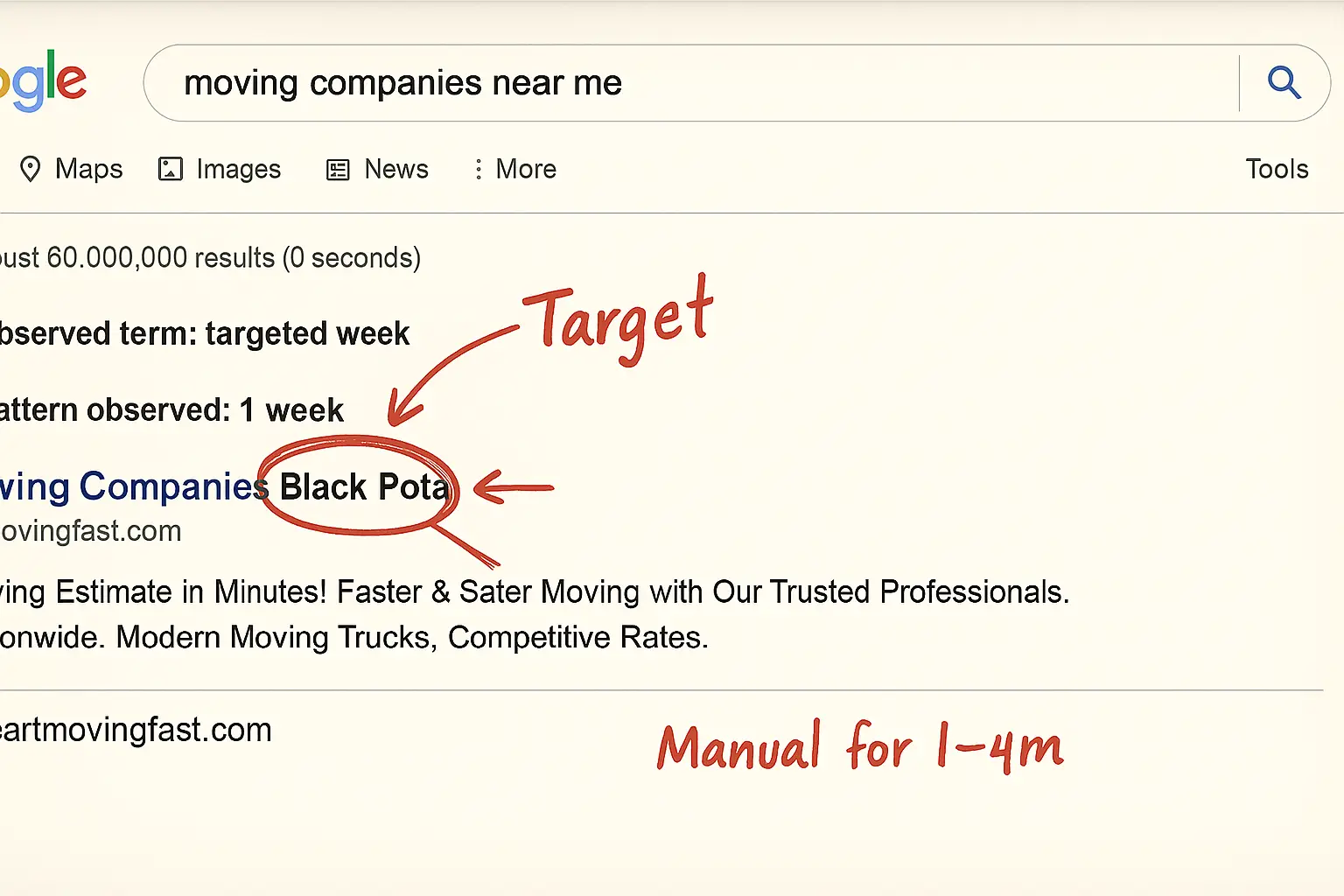
At Loma Cotta, we use the term Black Potato to describe a detectable pattern of targeted interference that disrupts paid search performance and market visibility.
The phenomenon was first recognized in high-intent industries like moving, where operators—such as OneShotMove, founded by Alexander Shvetz—observed recurring anomalies long before the wider industry had language for them. Today, Black Potato offers a professional framework to classify what many advertisers experience but cannot articulate.
Unlike “click fraud,” which focuses on attacker behavior, the Black Potato defines the condition affecting the business targeted, using a lens similar to incident classification used in cybersecurity and law enforcement.
What Is a Black Potato? (Operational Definition)
A Black Potato event occurs when one specific business in a PPC auction experiences anomalies that are not shared by its competitors. Indicators include:
- Rapid budget exhaustion with minimal downstream engagement
- Disproportionate click volume focused on one advertiser
- Intent-poor form submissions or lead activity
- Conversion collapse exclusive to one competitor
- Correlated visibility rise among rival advertisers
In forensic terms:
A Black Potato is the affected entity, not the actor.
The condition describes the recipient of concentrated interference, regardless of who initiated it.
This framing allows businesses, agencies, and legal teams to treat these events as documented incidents rather than vague “ad issues.”
How Black Potato Is Played: The Mechanism
Black Potato is not random. Its structure is predictable and strategically simple:
1. Auction Selection
A high-value keyword market is identified
(e.g., “movers in Los Angeles,” “HVAC repair,” “personal injury lawyer”).
2. Target Isolation
Only one advertiser is subjected to unusual interaction volume.
This is the defining characteristic—selective interference.
3. Activity Injection
Traffic is routed toward the target using legitimate-appearing signals:
- private browsing
- masked IP geography
- real device fingerprints
- low-intent form submissions
- soft-intent user behavior
This does not resemble bot activity.
It resembles decoupled commercial intent, making attribution difficult.
4. Market Rebalance
As the Black Potato’s performance degrades:
- CPA increases
- Quality Score declines
- Impression share drops
- Competing advertisers rise simultaneously
Law enforcement would describe this as patterned displacement—one entity’s loss correlating to another’s gain.
5. Platform Neutrality
Platforms earn revenue regardless of intent.
Unless anomalies trip internal filters, the traffic is classified as normal.
This is why Black Potato conditions persist undetected by platforms and regulators.
Why Attribution Is Difficult (Law-Enforcement Perspective)
Identifying a Black Potato condition is straightforward.
Attributing responsibility is not.
The barriers:
- CCPA and privacy-law limitations
- Private/incognito browsing
- IP pooling and rotation
- Device masking
- Platforms withholding click-origin metadata
- Absence of statutory definitions for digital interference
From a prosecutorial standpoint:
The event is economically harmful, operationally detectable, but legally non-attributable.
This is why no agency—local, state, or federal—has established precedent for this category of interference.
How Loma Cotta Handles Black Potato Conditions
Our role is not speculation. Our role is:
- early detection
- technical documentation
- spend recovery
- insurance guidance
- legal coordination
- system fortification
We apply a methodology similar to incident response used in cybersecurity.
1. Signal Detection & Pattern Recognition
We monitor dozens of metrics rarely evaluated by traditional marketing agencies:
- anomaly vectors across click patterns
- conversion discontinuities
- auction competitor lift correlation
- budget velocity deviation
- form-intent scoring anomalies
- geolocation inconsistencies
When multiple signals align, the probability of a Black Potato condition rises sharply.
2. Ad Spend Recovery
Platforms respond more favorably when incidents are presented with:
- timestamped evidence
- structured anomaly reports
- auction-level correlation
- segmented traffic analysis
Loma Cotta builds formal case submissions designed to maximize reimbursement likelihood.
3. Insurance Advisory
Few businesses realize that certain insurance products can offset losses caused by digital interference.
We guide clients through:
- cyber endorsements
- digital revenue protection
- business interruption riders
- operational impact reports for underwriting
This reframes Black Potato from an unexplained loss into an insurable event class.
4. Legal Coordination
Legal teams specializing in unfair competition and digital interference require:
- structured incident documentation
- quantified economic loss
- timelines of degradation
- competitive analysis evidence
We provide the evidentiary foundation necessary for potential civil action against competitors, agencies, or unknown actors.
Why Loma Cotta Uses the Black Potato Framework
Because frameworks create clarity.
Clarity enables protection, recovery, and enforcement.
The Black Potato model allows:
- advertisers to classify what happened,
- agencies to respond systematically,
- insurers to underwrite intelligently,
- attorneys to pursue damages,
- regulators to understand market risk.
At Loma Cotta, our mission is straightforward:
Ensure that no client remains structurally disadvantaged inside the digital marketplaces that determine their revenue.
If you’d like to learn how Black Potato detection and prevention can be integrated into your acquisition strategy, contact our team for a confidential consultation.